
Getting Up at Night to Urinate: Common Reasons and When to See a Doctor
Waking up to use the bathroom is one of the most common complaints of men over 50. The prostate is only one of several reasons, and the fix depends on which one is yours.
Waking in the small hours is one of the most common sleep complaints after 50. What changes in sleep with age, the usual culprits, and the habits sleep specialists recommend.
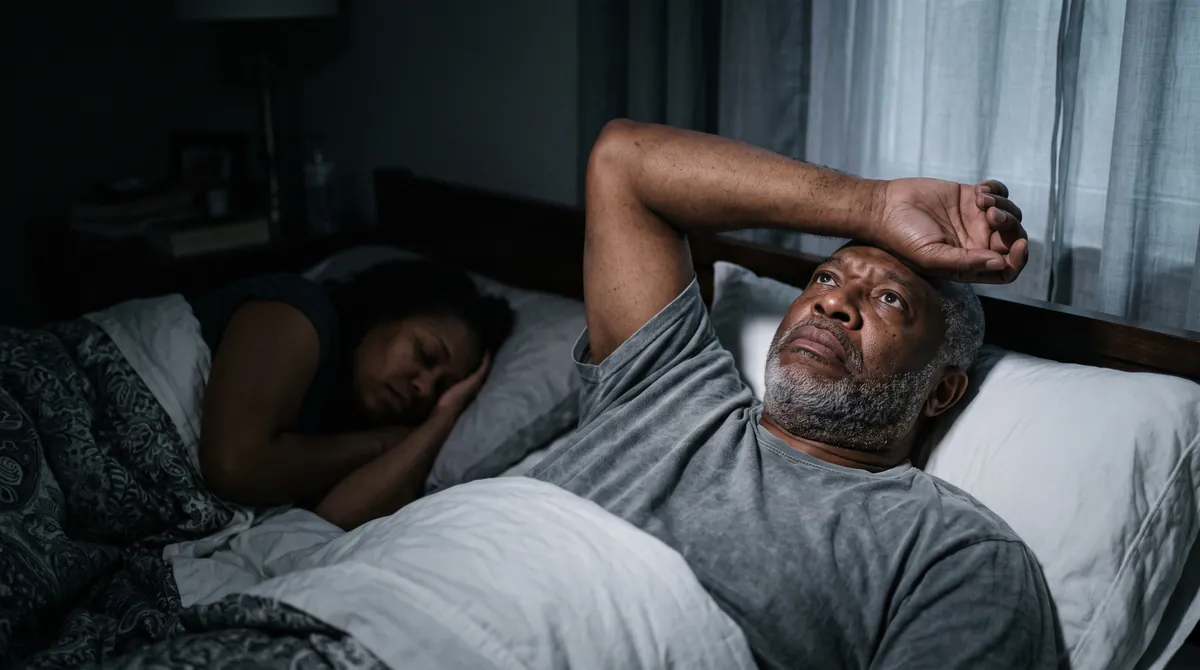
You fell asleep fine. Then, somewhere around three in the morning, you're wide awake, staring at the ceiling, mind already running through tomorrow. Ask men over 50 about their sleep and this comes up more than almost anything else.
Sleep isn't one long, even state. You cycle through lighter and deeper stages several times a night. With age, a few things shift:
The need for sleep doesn't vanish, though. The CDC recommends 7 or more hours for adults, and 7 to 8 hours from age 65.
Get up at the same time every day, weekends included, and get outside into daylight within an hour of waking. A consistent wake time and morning light are two of the strongest signals your body clock uses. Earlier bedtimes rarely fix early waking; a steadier morning often does.
Cool, dark and quiet. Many people sleep best in a room around the mid-60s Fahrenheit. Blackout curtains or an eye mask help, and so does keeping the phone out of reach.
Caffeine after lunch and alcohol in the last few hours before bed are the two easiest changes with the biggest payoff.
Regular exercise is linked to better sleep quality. Long naps, especially late in the afternoon, can eat into night-time sleep; if you nap, keep it short and early.
If it's been going on for months: the American College of Physicians recommends a structured approach called cognitive behavioural therapy for insomnia (CBT-I) as the first-line treatment for chronic insomnia in adults. It's available through clinics and approved apps. Ask your doctor before using over-the-counter sleep aids, which can cause next-day grogginess and interact with other medicines.
If poor sleep lasts more than a few weeks, if you snore loudly or wake up gasping, or if you're dozing off during the day (particularly while driving), book an appointment. Bring a week of notes on when you sleep and wake.
One page to take to your next appointment: the screenings, numbers and questions worth raising after 50, with space to write your results. Made to print.
We'll email you a link to confirm your address; confirming opens the download. You'll also get our occasional newsletter on strength, sleep and men's health. Unsubscribe anytime. We never sell your email address. See our Privacy Policy.
Check your inbox. We sent a message to confirm your address. Click the button in it and the checklist opens right away. Not there in a few minutes? Look in your spam or promotions folder.
Waking up to use the bathroom is one of the most common complaints of men over 50. The prostate is only one of several reasons, and the fix depends on which one is yours.

Most men see a doctor when something hurts. A short list of the screenings, numbers and questions worth raising after 50, based on U.S. Preventive Services Task Force recommendations.

A walnut-sized gland most men ignore until it gets their attention. What it is, why it changes with age, and which changes are common versus worth a call to your doctor.