
Getting Up at Night to Urinate: Common Reasons and When to See a Doctor
Waking up to use the bathroom is one of the most common complaints of men over 50. The prostate is only one of several reasons, and the fix depends on which one is yours.
Most men see a doctor when something hurts. A short list of the screenings, numbers and questions worth raising after 50, based on U.S. Preventive Services Task Force recommendations.

Plenty of men treat the doctor like a mechanic: you only go when something starts making a noise. The trouble is that several of the most important health problems after 50 make no noise at all until they're well advanced. That's what screening is for.
This list is built on the recommendations of the U.S. Preventive Services Task Force (USPSTF), the independent panel whose guidance most U.S. doctors and insurers follow. Recommendations are updated from time to time, and your own history may change what's right for you, so treat this as a starting point to take to your doctor.
| Check | Who and when | Why it matters |
|---|---|---|
| Blood pressure | All adults; at least yearly from 40 | High blood pressure usually causes no symptoms and is a major driver of heart attack and stroke. |
| Cholesterol and heart risk | Adults 40 to 75: your doctor estimates your 10-year heart risk | Decides whether cholesterol-lowering treatment makes sense for you. |
| Blood sugar | Adults 35 to 70 who are overweight; ask about your own risk | Prediabetes and type 2 diabetes are common and often silent. |
| Weight and waist | Every visit | A simple trend line that connects to heart, joints and sleep. |
| Screening | Who and when (USPSTF) |
|---|---|
| Colorectal cancer | Ages 45 to 75. Several test options, from a colonoscopy every 10 years to at-home stool tests; ask which fits you. |
| Prostate cancer (PSA) | Ages 55 to 69: an individual decision with your doctor. Not recommended routinely from 70. Higher-risk men may start the conversation earlier. See The PSA Test Explained. |
| Lung cancer | Ages 50 to 80 with a 20 pack-year smoking history who smoke now or quit within the past 15 years: a yearly low-dose CT scan. |
| Skin | No routine screening recommendation for everyone, but show your doctor any mole or spot that's new or changing. |
Ask which of these are due for you: the yearly flu shot, the shingles vaccine (recommended from age 50), pneumococcal (pneumonia) vaccination, a tetanus booster every 10 years, and RSV and COVID-19 vaccination according to current guidance. Vaccine schedules change, so check at each visit.
Our free printable checklist puts all of this on one page, with space for your numbers.
One page to take to your next appointment: the screenings, numbers and questions worth raising after 50, with space to write your results. Made to print.
We'll email you a link to confirm your address; confirming opens the download. You'll also get our occasional newsletter on strength, sleep and men's health. Unsubscribe anytime. We never sell your email address. See our Privacy Policy.
Check your inbox. We sent a message to confirm your address. Click the button in it and the checklist opens right away. Not there in a few minutes? Look in your spam or promotions folder.
Waking up to use the bathroom is one of the most common complaints of men over 50. The prostate is only one of several reasons, and the fix depends on which one is yours.

A walnut-sized gland most men ignore until it gets their attention. What it is, why it changes with age, and which changes are common versus worth a call to your doctor.
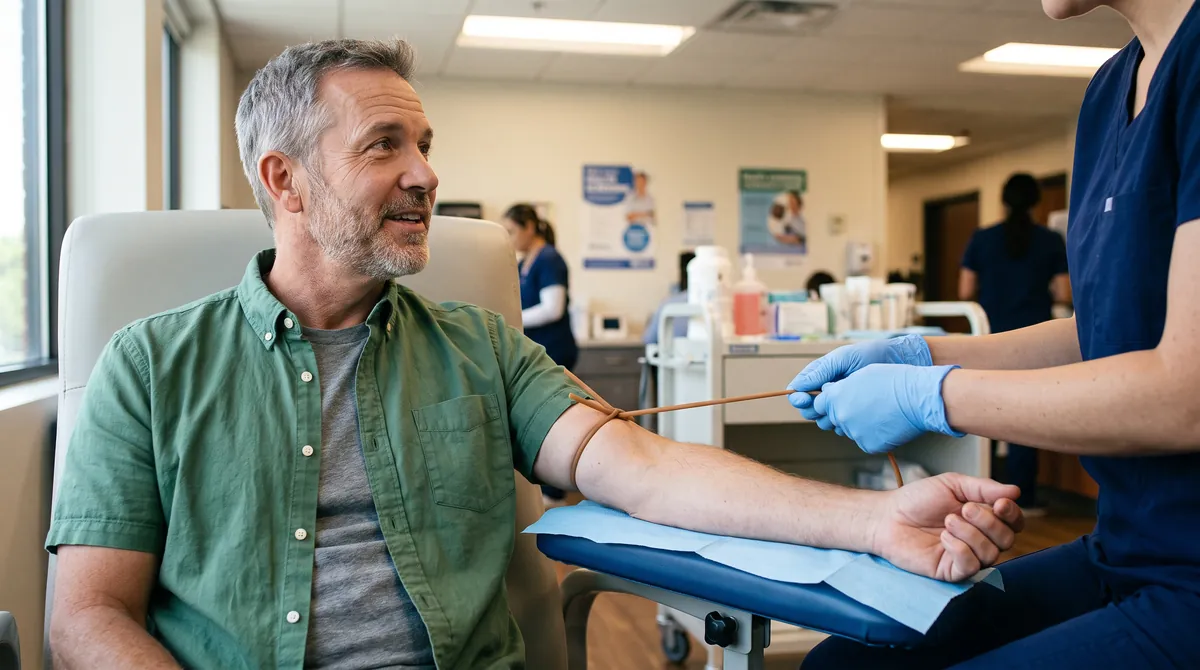
The PSA blood test is one of the most debated tests in men's health. What it measures, why a high number doesn't automatically mean cancer, and how to make the decision with your doctor.