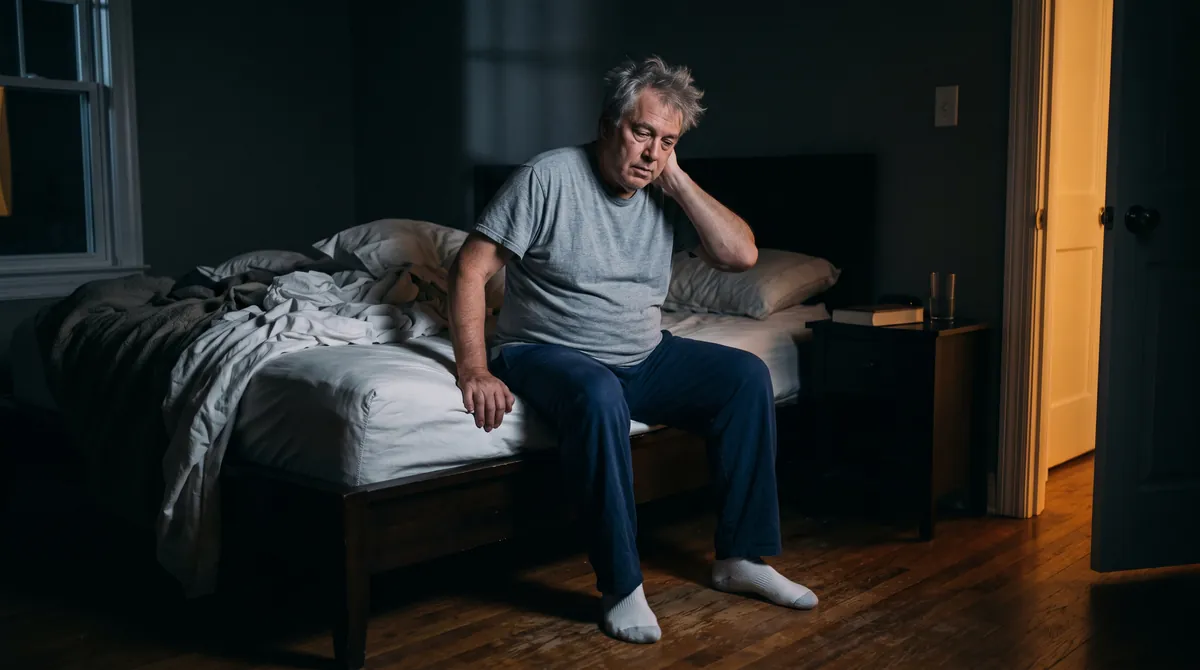
Getting Up at Night to Urinate: Common Reasons and When to See a Doctor
Waking up to use the bathroom is one of the most common complaints of men over 50. The prostate is only one of several reasons, and the fix depends on which one is yours.
A walnut-sized gland most men ignore until it gets their attention. What it is, why it changes with age, and which changes are common versus worth a call to your doctor.

Ask a room of men where their prostate is and what it does, and you'll get a lot of vague pointing. That's understandable: for the first half of life it mostly minds its own business. But it's a gland that keeps changing as you age, and knowing the basics makes everything else (the bathroom trips, the PSA conversation, the questions your doctor asks) much easier to follow.
The prostate is a small gland, about the size of a walnut in a younger man, that sits just below the bladder and in front of the rectum. The detail that explains almost everything about it: the urethra, the tube that carries urine out of the bladder, runs straight through the middle of it.
Picture a garden hose running through a ring. As long as the ring stays the same size, the water flows freely. If the ring slowly thickens, it starts to press on the hose. That's essentially what happens when the prostate grows.
The prostate's main job is reproductive: it makes part of the fluid that carries and protects sperm. It also contains muscle fibres that help control the flow through the urethra. It runs on hormones, which is one reason it keeps changing over the decades.
The prostate has two main growth phases. The first happens in puberty, when it roughly doubles in size. The second starts around the mid-20s and continues, slowly, for the rest of a man's life. Researchers believe changing hormone balance with age plays a central role, though the exact mechanism isn't fully settled.
When that growth is non-cancerous, doctors call it benign prostatic hyperplasia, or BPH. It is extremely common. According to the StatPearls medical reference, it affects roughly half of men between 51 and 60, and up to 90% of men over 80. Not every man with an enlarged prostate notices anything, and size alone doesn't predict how much it bothers you.
When the prostate presses on the urethra or irritates the bladder, the signals tend to show up in the bathroom:
These changes usually creep in over years, which is exactly why men put up with them. Many assume it's "just getting older" and never mention it. Doctors would rather hear about it: there are lifestyle steps and medical options, and the same signals can occasionally have other causes worth ruling out.
Don't wait on these. See a doctor promptly if you have blood in your urine, pain or burning when you urinate, fever with urinary symptoms, or you suddenly can't urinate at all. Not being able to pass urine is an emergency.
This is the part that worries men most, so it's worth being clear. Benign enlargement is not cancer, and according to the National Institute of Diabetes and Digestive and Kidney Diseases (NIDDK), having BPH does not appear to raise your risk of prostate cancer. The two can exist at the same time, though, and early prostate cancer often causes no symptoms at all. That's why the question of screening is a separate conversation, which we cover in The PSA Test Explained.
One page to take to your next appointment: the screenings, numbers and questions worth raising after 50, with space to write your results. Made to print.
We'll email you a link to confirm your address; confirming opens the download. You'll also get our occasional newsletter on strength, sleep and men's health. Unsubscribe anytime. We never sell your email address. See our Privacy Policy.
Check your inbox. We sent a message to confirm your address. Click the button in it and the checklist opens right away. Not there in a few minutes? Look in your spam or promotions folder.
Waking up to use the bathroom is one of the most common complaints of men over 50. The prostate is only one of several reasons, and the fix depends on which one is yours.
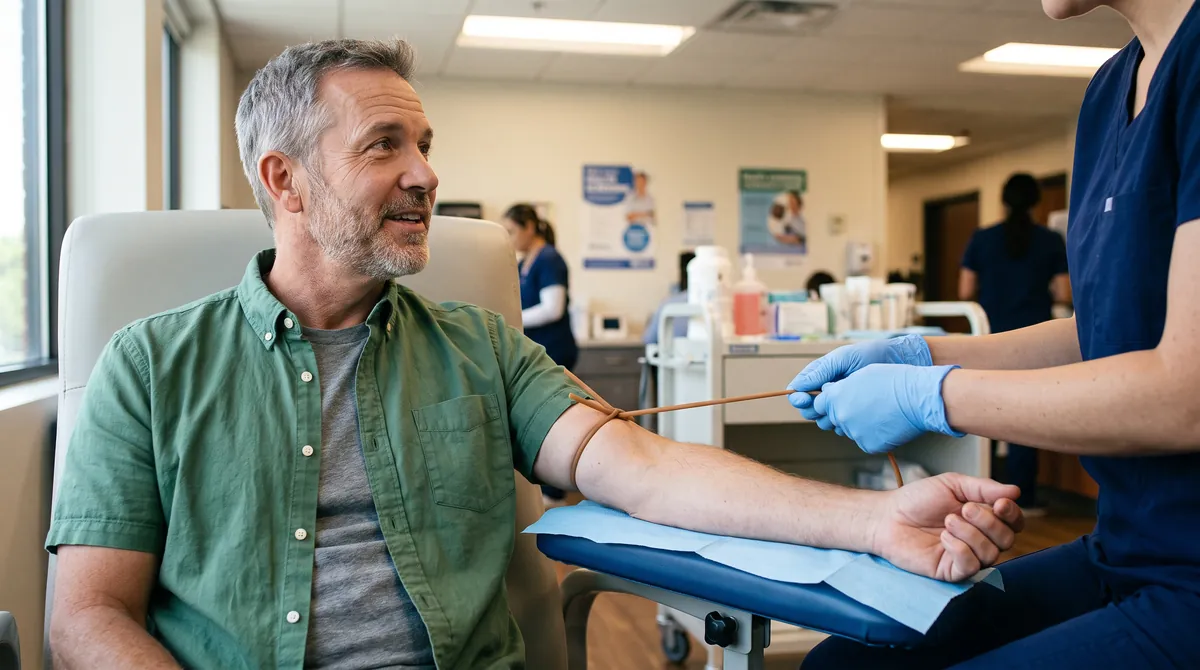
The PSA blood test is one of the most debated tests in men's health. What it measures, why a high number doesn't automatically mean cancer, and how to make the decision with your doctor.

Most men see a doctor when something hurts. A short list of the screenings, numbers and questions worth raising after 50, based on U.S. Preventive Services Task Force recommendations.